
Pool drainage questions
Straight answers, including the ones where the honest answer is “it depends.”
Why is my pool liner floating?
Groundwater pressure can build beneath a pool after heavy rainfall or during a period of high water table, allowing the liner to lift away from the pool floor. An assessment helps determine whether groundwater is actually the cause in your case.
Is water behind my liner always caused by a leak?
No. A leak is one possibility, but groundwater can also collect behind or beneath a liner. Noticing when the problem appears — particularly after heavy rainfall — is a useful clue, but proper investigation is the reliable way to identify the source.
Will pumping the water out fix the problem?
Pumping may remove accumulated groundwater and address the immediate symptom, but it does not necessarily correct the conditions causing water to return. If the surrounding drainage issue remains, the problem can recur.
Can a relief well remove water already behind my liner?
It may assist with groundwater management, but relief wells are primarily intended to provide ongoing access to groundwater and to help prevent pressure from repeatedly building around the pool. Water already trapped behind a liner may require additional pumping or remediation.
Do all pools need relief wells?
No. Whether one is beneficial depends on groundwater conditions, soil, drainage, property history and pool construction. They can be particularly valuable on properties with known groundwater issues or previous liner movement.
Can a relief well be installed beside an existing pool?
In many situations, yes. Existing vinyl liner pools may be candidates for a relief well, although site conditions and access should be evaluated first.
Can Pool Busters install daylight drains?
Yes, on properties where grading, drainage conditions and an appropriate discharge location make gravity drainage feasible.
What is the difference between a drainage assessment and a drainage survey?
An assessment evaluates the drainage concern and provides findings and recommendations. A drainage survey is a more comprehensive investigation that may include elevation measurements, drainage mapping and a deeper evaluation of potential drainage solutions.
Why does my liner look worse after heavy rain?
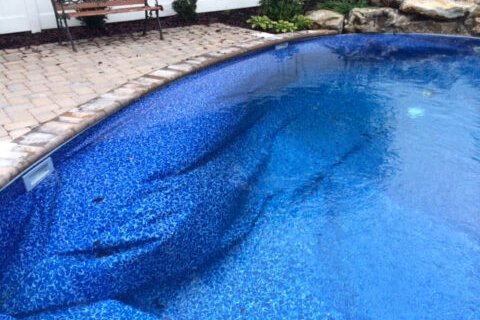
Heavy rainfall can raise groundwater levels around a pool. If water accumulates beneath the liner it may temporarily lift or move, resulting in visible wrinkles, bubbles or loose areas.
What does a floating liner actually look like?
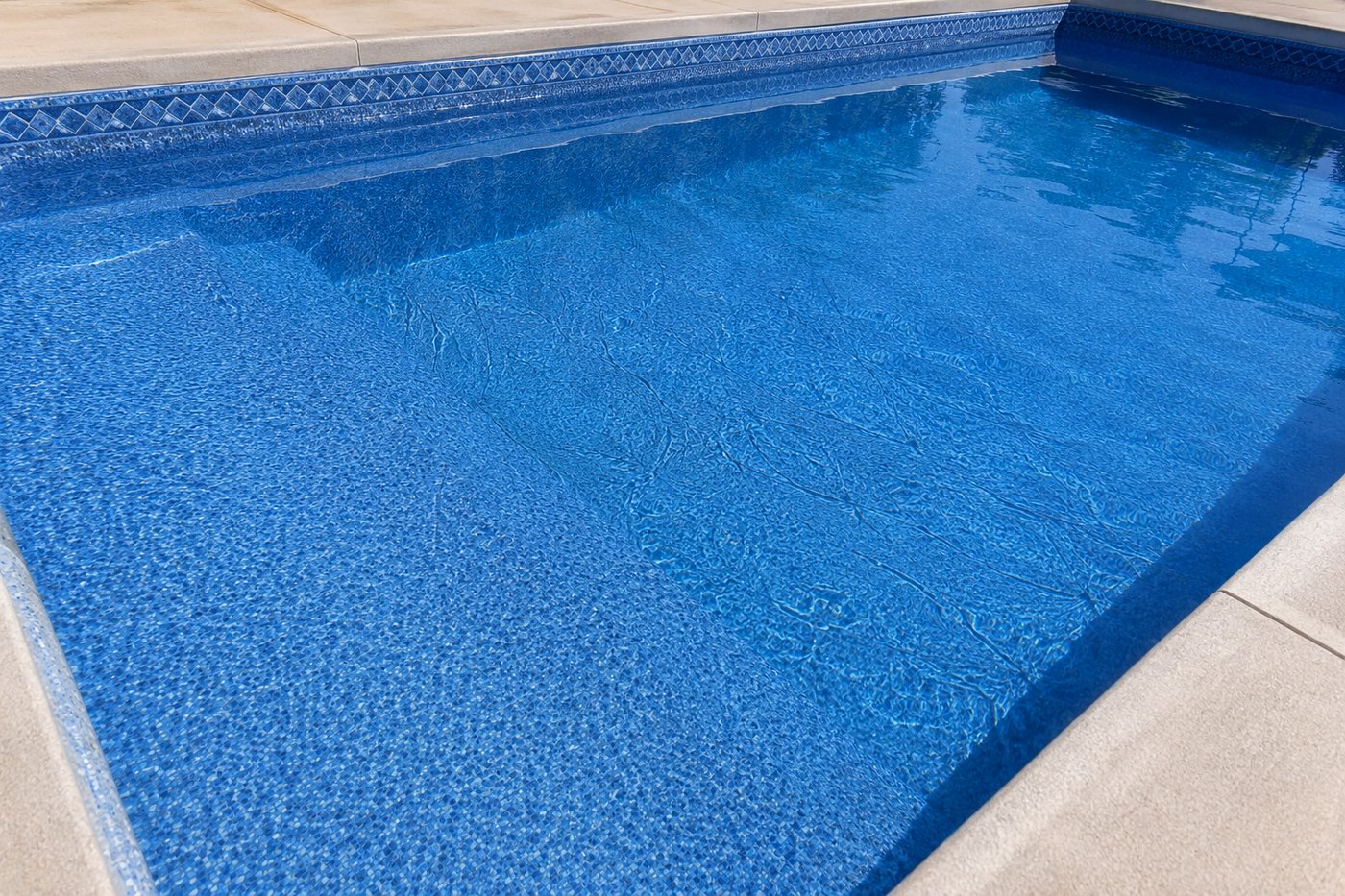
Usually one broad, soft rise in the floor rather than a sharp fold, with creases fanning out from it toward the walls. The liner may feel loose or move underfoot, and the whole thing often appears within a day or two of heavy rain. In a deep end it can look like the floor has developed a hump; in a shallow end it can look like a wide ripple running across the pool.
How do I tell groundwater wrinkles from chemistry wrinkles?
Timing and pattern are the two useful clues. Groundwater lifting shows up suddenly — after heavy rain or during a high water table — as one or a few large soft bulges, and the liner can feel like it is moving. Wrinkles from low pH or low total alkalinity appear gradually over weeks or months as the vinyl absorbs water and stretches, and they tend to be many fine wrinkles spread evenly across the floor and up the walls rather than one dome. If your test history shows a run of low pH or low alkalinity, chemistry is the likelier explanation. Both can be present at once, which is why the pattern alone is not proof.
Should I drain my pool if the liner is floating?
Do not make major changes to the pool water level without considering groundwater conditions. Lowering the water level while groundwater is high can reduce the pressure holding the liner in place. When in doubt, have the condition assessed first.
Deal with groundwater before it gets expensive
Wrinkles, water behind the liner, wet ground — or peace of mind before a replacement. We’ll assess the conditions and recommend a next step.
Pool Busters · 170 Hwy #20 West, Unit 7, Fonthill, ON L0S 1E0 · (289) 929-7665 · Serving Niagara & Beyond.
© 2026 Alexis Woolley · Designed & Maintained by Alexis Woolley