

Protect your pool from groundwater damage
Groundwater floats vinyl liners, shifts decks and moves hardscape. Pool Busters diagnoses and solves pool drainage across the Niagara Region.
The problem isn’t always in the pool.
Heavy rainfall raises the water table in the ground around a swimming pool.
Look beneath the surface.
A shell, a liner, and the water holding it down — surrounded on every side by soil.
Groundwater rises through the surrounding soil.
Clay soils and poor drainage hold water against the pool instead of letting it move away.
Pressure builds below the pool.
When the water outside outweighs the water inside, it pushes up on the floor.
The liner can lift away from the pool floor.
A “floating liner.” The wrinkles can outlast the water by years.
The problem you can’t always see
Water behind a liner reads as a leak. It can just as easily be the ground.
A leak lets water out
Water escapes through the liner, a fitting or the plumbing. The level drops — the same in dry weather as in wet.
Groundwater pushes in
Water collects in the soil outside and pushes in. It appears, or worsens, after heavy rain.
Timing is the clue. A problem that follows rainfall is worth investigating from the outside in.
Why does a pool liner float?
A vinyl liner is held down by the weight of the water above it. Groundwater works against that from underneath.
- Ground level and pool deck
- Pool shell and walls
- The vinyl liner, held on by the water above it
- Pool water — the weight holding the liner down
- Surrounding soil, free-draining or water-holding
- The water table: below this, the ground is saturated
- Hydrostatic pressure, pushing up on the floor
Not every property is equally affected
Two identical pools a street apart can behave completely differently. The ground is what changes.
- High groundwater tables
- Heavy or prolonged rainfall
- Clay soils
- Poor property drainage
- Nearby creeks, rivers and other water sources
- Saturated lots
- Blocked or inadequate drainage systems
- Site grading
What your pool may be telling you
It rarely announces itself. It shows up as small things that seem unrelated — until they all happen in the same week each year.
In the pool
- Wrinkles appearing suddenly after rain
- Soft spots underfoot beneath the liner
- Water visible behind the liner
- The liner feels loose, or moves when you push it
Around the pool
- Standing water on or beside the deck
- Deck sections settling or shifting
- Coping or hardscape moving out of line
- Any sense that the pool itself has moved
Around the property
- A sump pump that runs almost constantly
- Backyard stays wet long after the rain stops
- Soft, spongy lawn near the pool
- Water pooling in the same low spot every spring
One symptom confirms nothing. An assessment works out which explanation fits.
Before you act
Please don’t drain the pool to “have a look”
The water inside is what holds the liner down. Lowering it while groundwater is high removes that counterweight at the worst possible moment.
Get the conditions assessed first.
What is a pool relief well?
A vertical collection point set beside the pool. It gives the water somewhere to go, and you somewhere to look.
- The pool, with the water table above its floor
- The water table: the ground below is fully saturated
- A capped vertical casing, set deeper than the pool floor
- Groundwater collects there instead of against the pool
- Monitored, and pumped out when conditions require
One important distinction
It is not an instant fix for water already behind a liner — that may still need pumping. Its value is preventative.
When is a relief well worth considering?
Not every pool needs one. These are the moments worth asking.
New pool construction
The excavation already exists, so the work is far simpler than it will ever be again.
Liner replacement
The pool is down and the site disturbed — a natural moment to deal with groundwater rather than build over it.
A known groundwater property
A high water table, a previous floating liner, a lot near a creek, or a history of saturated soil.
What is a daylight drain?
A drainage path that uses the property’s own slope to carry groundwater away. No pump, no power — gravity does the work.
- The pool, at the higher end of the property
- A perforated pipe, bedded in gravel below the water it must intercept
- A continuous fall — gravity is the only mechanism
- The drain “daylights”: it opens lower down and discharges at the surface
- No electricity for gravity drainage
- No moving parts
- Continuous drainage
- Low ongoing maintenance
- A long-term option on the right grade
Two different ways to manage groundwater
Same problem, opposite directions. One gives water somewhere to collect; the other gives it somewhere to go.
There is no default answer
Neither is automatically better. Which one fits depends on the site — that is what an assessment is for.
From below-grade problem to long-term plan
Drainage work is invisible once finished. These are the stages worth seeing.
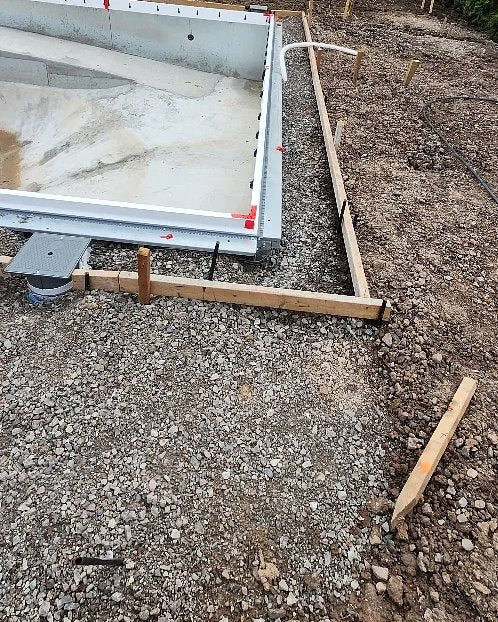
A relief well set at the corner of a vinyl-liner pool, cast in before backfill.
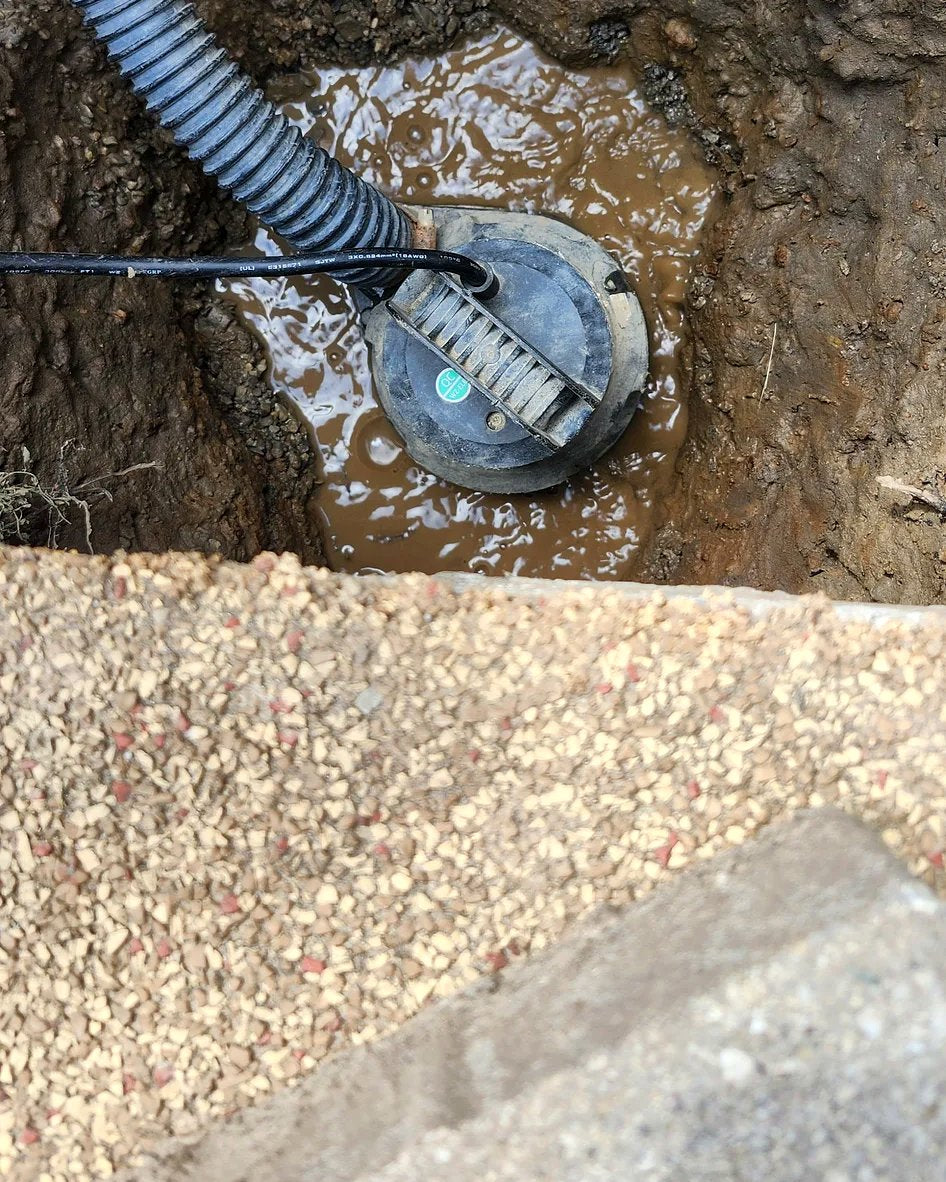
Dewatering the shaft as a relief well goes in.
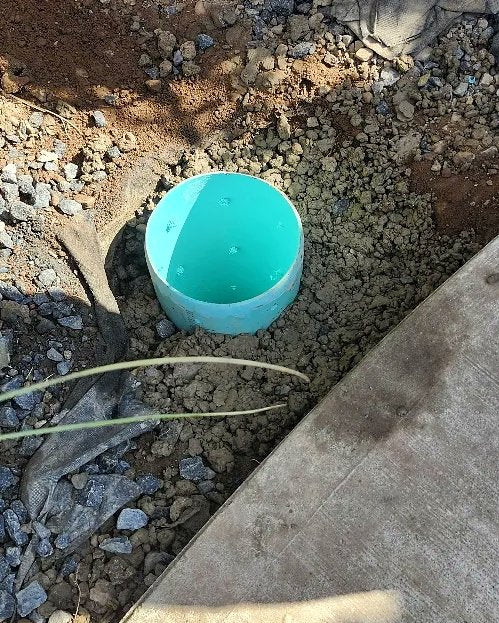
A finished relief-well standpipe, set in gravel and ready to backfill.
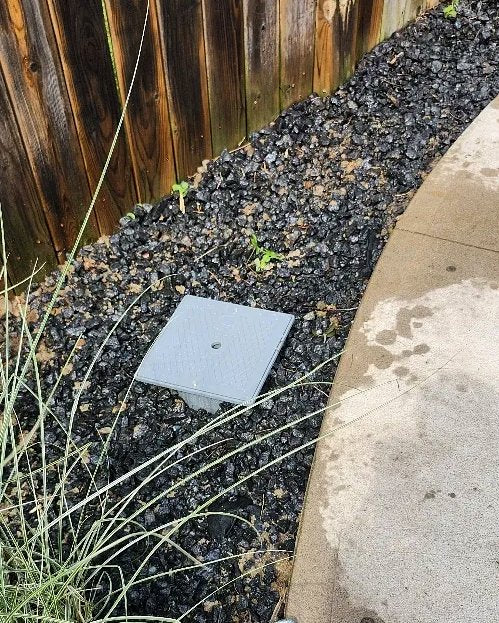
The access cover, landscaped back in once the work was done.
Photography is from Pool Busters projects in the Niagara Region. Conditions and results vary from property to property.
Pool drainage requires pool knowledge
Groundwater does not stop at the lawn. It works on the liner, the shell, the plumbing and the hardscape — and a drainage fix that ignores the pool tends to create a second problem later.
Whether the liner is already moving or you are getting ahead of a replacement, the goal is the same: understand the conditions, then recommend something appropriate.
Deal with groundwater before it gets expensive
Wrinkles, water behind the liner, wet ground — or peace of mind before a replacement. We’ll assess the conditions and recommend a next step.
Pool Busters · 170 Hwy #20 West, Unit 7, Fonthill, ON L0S 1E0 · (289) 929-7665 · Serving Niagara & Beyond.
© 2026 Alexis Woolley · Designed & Maintained by Alexis Woolley